

THE BENEFITS OF OMEGA 3s
Essential fatty acids (EFAs) are beneficial fats, essential in maintaining good health.
Since EFAs cannot be made in the body, they must be ingested daily, through diet and supplementation.
There are two families of EFAs: omega-3 and omega-6.
Omega-3 EFAs are crucial to maintain optimal health. And can help with the following:
- Heart health
- Brain function (including ADD, mood and memory)
- Inflammation
- Joint health
- Eye health
- Skin integrity and cell membrane fluidity
- In pregnancy, can help with baby’s brain and nervous system development.
Omega 6 fatty acids: whilst small amounts are important for your body, excessive omega-6 EFAs may lead to increased inflammation and development of chronic disease.
A Western diet is already typically higher in omega-6 EFAs, so focusing on adequate intake of omega-3 EFAs is important to guarantee good health:
- Up to 2 tablespoons of healthy cooking oils daily (e.g. cold pressed olive oil or flaxseed oil).
- Three serves of fish per week (e.g., wild caught salmon, cod, sardines, anchovies, whiting, herring, mackrel, trout, seabass, tinned tuna or shellfish such as oysters or prawns). Tuna is also a good source of omega 3s – tinned is best as it is smaller tuna that steak tuna which can be very high in mercury and other metals. Avoid shark, swordfish, marlin, orange roughy, large tuna (i.e. tuna steaks).
- Take natural fish oil supplements. Be aware of the cheaper varieties as they may contain dangerous levels of mercury and other toxins.
For vegetarians and vegans, omega 3’s can be consumed in the following foods:
- Walnuts
- Flaxseeds
- Hemp seeds
- Chia seeds
- Seaweeds such as nori, dulse or wakame.
- Spirulina
- Chlorella
- Edaname
- Kidney Beans
Complied with the assistance of Metagenics Australia’s patient brochure Essential Fatty Acids
Red Meat
Limit red meat to no more than once or twice per week. These guidelines are in line with the Mediterranean diet, which is the most researched diet proven to support health optimally.
Red meat is high in carnitine, which is metabolised to a compound called TMAO which is detrimental to cardiovascular health, therefore if you have elevated cholesterol, a history or family history of cardiovasculr disease, it is best to treat red meat like a treat food.
Avoid all processed meats such as ham, salami, bacon etc unless it is preservative, MSG and colour free.
Legumes
Legumes are a food high in fibre and resistant starch, which is excellent for feeding beneficial bacteria which produce a compound called butyrate in the gut, which is associated with multiple beneficial health outcomes.
Legumes are best prepared from scratch, however tinned versions are convenient and using tinned is better than not doing it at all. To make the legume from scratch, place the desired amount of legume in some salted water (I prefer sea salt) and soak for at least 24 hours, changing the water 3 times. When you change the water, give the legumes a good wash. Following this process ensures the phytic acid levels in legumes are low. Phytic acid can block your absorption of minerals and are usually responsible for some of the gastrointestinal effects some people experience when they eat legumes. If using a tinned version, rinse in a sieve prior to adding to salads or cooking.
Ways to include legumes in the diet are:
- Add lentils to bolognaise, shepherds pie or moussaka recipes
- Have baked beans on a good quality gluten free bread for breakfast
- Add cannellini or 4 bean mix beans to salads
- Add black beans to Mexican dishes
- Include Dhal in the diet
- Hummus or white bean dips served with seed crackers, olives and vegetable sticks makes a nutritious snack, spread on a wrap or toast or added to a salad.
- Magic bean cake
Hummus Recipe
INGREDIENTS:
- 1 can chickpeas, rinsed and drained, or 1 1/2 cups thoroughly cooked chickpeas
- ¼ cup lemon juice (from 1 ½ to 2 lemons), more to taste
- 2 large clove garlic, roughly chopped
- 1/2 teaspoon fine sea salt, to taste
- 1/2 cup tahini
- 2 to 4 tablespoons water, more as needed
- 1 teaspoon ground cumin
- 1 tablespoon extra-virgin olive oil
METHOD
- In a food processor or high-powered blender, combine the lemon juice, garlic and salt. Process until the garlic is very finely chopped, then let the mixture rest for 10 minutes to allow the garlic flavor to mellow.
- Add the tahini to the food processor and blend until the mixture is thick and creamy, stopping to scrape down any tahini stuck to the sides and bottom of the processor as necessary.
- While running the food processor, drizzle in 2 tablespoons water. Scrape down the food processor, and blend until the mixture is ultra smooth, pale and creamy. (If your tahini was extra-thick to begin with, you might need to add 1 to 2 tablespoons more water.)
- Add the cumin and the chickpeas to the food processor. While blending, drizzle in the olive oil. Blend until the mixture is smooth, scraping down the sides of the processor as necessary, about 2 minutes. Add more water by the tablespoon if necessary to achieve a creamy texture.
- Taste, and adjust as necessary— add another 1/4 teaspoon salt for more overall flavor and another tablespoon of lemon juice for extra zing.
- Scrape the hummus into a serving bowl. Leftover hummus keeps well in the refrigerator, covered, for up to 1 week.
Dhal recipe
INGREDIENTS:
- 1 tbsp extra virgin olive oil
- 2 green cayenne chillies , deseeded and cut into chunks (optional)
- 1 medium onion , finely chopped (brown or yellow)
- 6 garlic cloves , finely chopped
- 1 tbsp ginger , finely chopped (1.5cm / 3/5″)
- 8 fresh curry leaves , or 6 dried
- 1 tomato , chopped
- 1/2 tsp ground cumin
- 1 cup red lentils
- 4 cups / 1 litre water or vegetable stock for more flavour
- 1/2 tsp turmeric powder
- 1/8 tsp garam marsala
- 3/4 tsp salt
METHOD
- Soak Lentils: Rinse lentils and leave to soak in plenty of water for 1 hour. Drain in colander.
- Heat oil in a heavy based saucepan over high heat. Add green chillies and fry for a minute until starting to blister.
- Add onions and fry until softened.
- Lower heat to medium, add garlic, ginger and curry leaves. Cook for 1 minute until garlic starts to turn golden.
- Add tomatoes and cumin, cook until tomatoes start to break down and thicken to a paste – about 2 minutes.
- Add lentils, water/stock, tumeric and salt. Stir, bring to simmer, cover and simmer gently for 1 hour. Stir two or three times during the hour.
- Remove lid and simmer gently for 30 minutes to thicken, stirring every now and then. The dal is ready when it has a consistency like porridge.
- Stir through garam masala at the end. Adjust salt if desired.
- Serve Dal over brown rice, garnished with chopped coriander.
Phytonutrients
Beneficial bacteria such as Akkermansia, Bifidobacteria & lactobacilli are all fed by dietary polyphenols. Plant foods which are blue/purple contain polyphenol, such as cranberries, purple cabbage, cherries, blue/purple potatoes, purple kale, red onion, broccoli, red lettuce, black quinoa, olives, olive oil, flax, hazelnuts, chestnuts, pecans, black tahini, purple carrot, berries, red or black rice, red kidney beans, plums, red/purple grapes etc. Green tea is an excellent source of polyphenols – aim for 2 cups per day.
Increasing polyphenols in the diet over a longer period can make a big difference to microbiome health.
Make smoothies, chia puddings or bliss balls with Viberi Black Currant Powder.
Eat a rainbow of fruit and vegetables every day. More than half of us are deficient in phytonutrients. We need to consume all the colours of plants every day: red, yellow, white, green, orange and purple. Each colour pigment feeds a different type of gut bacteria and has a different health benefit in the body.
- Ensure you include 2 cups of fruit daily and,
- At least 3 cups of vegetables with every meal to help meet this requirement.
Phytochemicals are plant based substances which have beneficial effects to our health. Organic plants contain greater levels of phytonutrients than non-organic plants due to their exposure to stressors. Stressors such as pests ensure the plant initiates an antioxidant defence mechanism in the form of phytochemicals.
Fibre
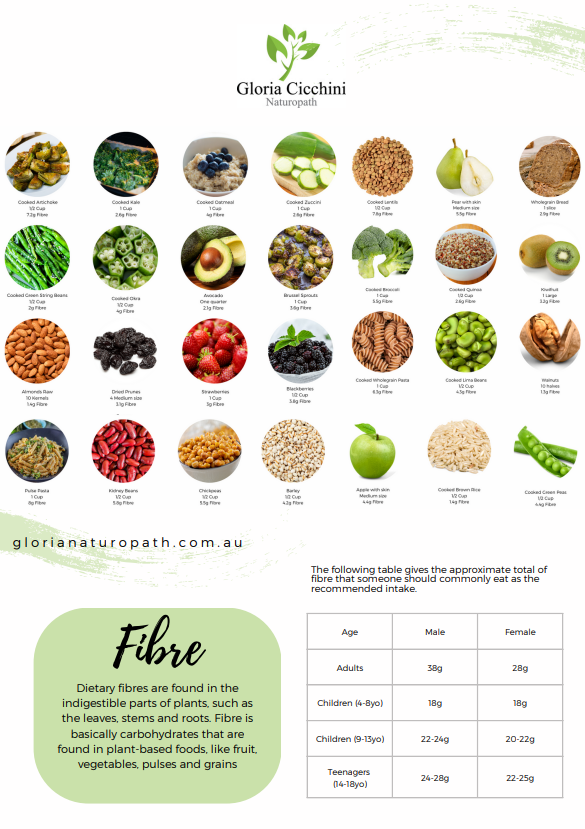
Dietary fibre is an important aspect of eating for wellness. Fibre feeds our beneficial gut flora and has been associated with many health benefits. The microbiome is an important aspect at play in numerous essential functions in the body – from brain health to immune system health.
We need a healthy microbiome to absorb vitamins and minerals, maintain low levels of inflammation, maintain a strong gut barrier function, ensure amino acids travel the correct pathway to make feel good neurotransmitters in the brain and to educate our immune system to be strong and robust, and not mount inadequate responses to our own body’s tissue, as occurs in autoimmunity.
- Women require 28 grams of fibre per day to eat in line with researched benefits
- Men require 38 grams per day
Cruciferous vegetables
Cruciferous vegetables such as broccoli, kale, brussel sprouts, cabbage, watercress, broccolini, and arugula should be consumed every day.
This class of vegetable will reduce cardiovascular markers in the microbiome, improve hormone breakdown, metabolism and excretion, increase toxin removal from the body, and activate antioxidant defenses via multiple pathways.
It is ideal to consume at least 1 cup per day to benefit optimally.
Superfoods
Superfoods are usually consumed as powders added to smoothies. Regular consumption of green smoothies will make remarkable improvements to most people’s health and is an excellent thing to get kids used to from a young age, so you can sneak supplements into them.
Superfoods include: Aloe vera, Kakadu Plum, Camu Camu, Broccoli sprouts, Chlorella, Corriander and any type of Berry (including frozen).
Organic food
Go organic as much as your budget can afford. Take note of the annual EWG Dirty Dozen and Clean 15 lists if you need to choose between some and all organic, as you can choose organic for the foods with higher pesticide residue.
As a general rule, prioritise animal products first, then fresh produce as animals will concentrate toxins in the fat cells, and then we will accumulate these toxins when we eat them.
If you can’t go organic, try to shop at your farmer’s market as you can usually speak to the grower and ask them how much the product has been sprayed. Many times, farmers that sell at a farmers market are “spray free” but not certified organic, which is much better than conventionally grown produce.
For produce you cant consume organic, please ensure you wash thoroughly using a fruit and vegetable wash (I like the Abode brand which you can buy from health food shops or purchase here) or vinegar and bicarb soak.
Water
One of the best investments you can make in your family’s health is a reverse osmosis water filter on your drinking water tap. Reverse osmosis removes EVERYTHING from your water. This combined with a healthy, predominantly organic diet, is a powerful daily practice in caring for your health. There are both countertop and under-sink filters available. Both are as beneficial as one another. Speak to your plumber about under-sink varieties.
Do not remineralise your water, as minerals are balanced when they come from food. Most remineralisation products will disrupt your mineral metabolism providing minerals that you do not need, causing imbalances in the body. It is best to simply remove everything, then eat a healthy diet and test annually for nutrient deficiencies to see what you need. I use hair tissue mineral analysis to monitor this with my patients.
The information provided in this blog is for personal or other non-commercial, educational purposes. It should not be considered medical or professional advice. We recommend consulting a qualified healthcare professional before taking or omitting any action based on this content. While the author uses best endeavours to provide accurate and true content, the author makes no guarantees or promises and assumes no liability regarding the accuracy, reliability or completeness of the information presented. The information, opinions, and recommendations provided are for general information only, and any reliance on this content is done at your own risk. Any third-party materials or external content referenced in this blog do not necessarily reflect the author’s opinion, standards or policies and the author assumes no liability for them.
Share this Blog
If you enjoyed this article share it across your socials




LED Light Mask Perth
Transform your skin in just 10 - 20 minutes per day using this multi use, flexible medical grade silicone LED face mask for a fraction of the price of other brand name masks on the market. I have Mask available now in my Perth Clinic